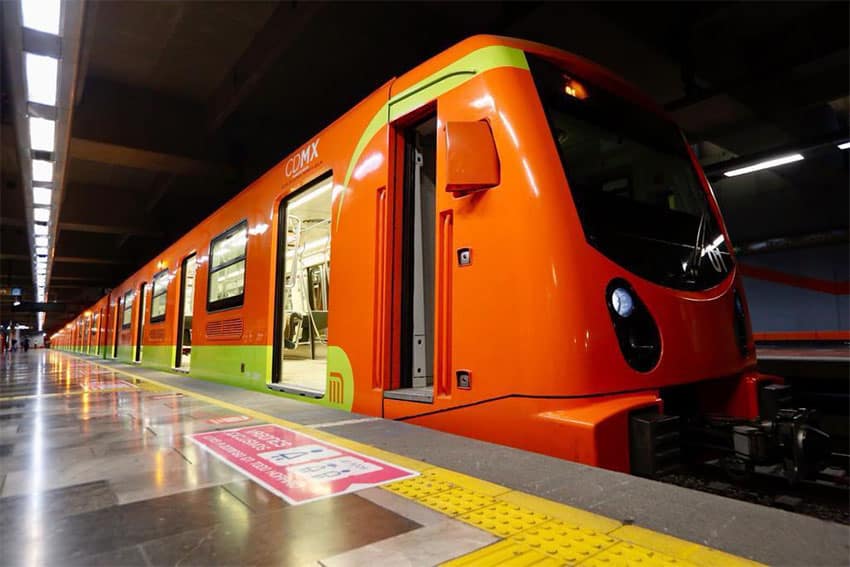
On proximity, movement, and learning a city underground
The first time I descended into the Sistema de Transporte Colectivo Metro, I felt a flicker of panic.
Not fear exactly. More like disorientation.
The stairwell swallowed the light. The air shifted — cooler, metallic. The city’s surface noise softened and was replaced with something subterranean: brakes screeching, vendors calling out softly, the hum of electricity under tile.
Above ground, Mexico City feels vast and impossible to comprehend. Twenty-plus million people. Neighborhoods folding into neighborhoods. Traffic pressing in from every direction.
Below ground, it compresses.
Everyone funnels through the same corridors.
You stand shoulder to shoulder with strangers. You grip the same metal pole. You sway together when the train lurches forward. There is no curated distance. No private vehicle bubble.
As someone from a place where driving is default, where space is abundant and personal radius is protected, this kind of closeness felt intimate.
And then, strangely, freeing.
On the Metro, no one knows who you are.
No one cares what you do.
No one cares what you earn.
No one cares what neighborhood you’re staying in.
You are just another body in motion.
There is something humbling about that.
The Emotional Geography of the Metro
Each line feels like a different mood.
On Line 3, heading toward Coyoacán, families board with children and backpacks. Teenagers lean into each other, sharing earbuds. Vendors step on between stops selling gum, charging cables, small toys.
Sometimes a musician moves through the car — a guitar, a recorded backing track from a small speaker. Sometimes a person tells a rehearsed story asking for help.
The Metro is not just transportation.
It’s a cross-section of the city.
Students. Office workers. Street vendors. Grandparents. Tourists clutching maps. People carrying entire portable livelihoods in rolling carts.
It is loud. It is imperfect. It is alive.
And it forces you to participate in the city rather than observe it from behind glass.
Practical Things I’ve Learned
If you’re new to the Metro, here’s what I wish someone had told me:
1. Get an Integrated Mobility Card
You’ll want a Tarjeta de Movilidad Integrada. It works for the Metro, Metrobus, and other public transit systems. You can buy and reload it at stations. It’s inexpensive, and rides cost just a few pesos.
Carry small bills or coins the first time — machines don’t always love large denominations.
2. Avoid Rush Hour (At First)
Weekdays roughly 7:00–9:30 a.m. and 5:00–8:00 p.m. are intense. If you’re learning the system, go mid-day your first few rides so you can read signage without pressure.
Rush hour isn’t dangerous — it’s just dense.
3. Use the Icons
One of my favorite details: many stations use symbols in addition to names. This helps with navigation even if your Spanish is limited. Study the line color and the end-of-line destination — that matters more than the stop you’re starting at.
4. Be Mindful of Belongings
Wear your backpack on your front in crowded cars. Keep your phone secure. It’s the same awareness you’d use in any major global city.
5. Women-Only Cars Exist
During busy times, the first cars are often reserved for women and children. Respect the signage. It’s part of how the system adapts to real safety concerns in a megacity.
6. Stand Right, Walk Left
On escalators, locals typically stand to the right and walk on the left. It’s a small thing, but following that rhythm helps you blend in.
What the Metro Has Taught Me
The longer I use it, the more I notice something subtle.
In the United States, I often move through cities in isolation — headphones on, car doors locked, climate controlled, insulated.
On the Metro, you cannot isolate completely.
You feel the collective start and stop.
You sense impatience ripple through a car when delays happen.
You share small glances with strangers when something unexpected occurs.
There is a shared choreography.
And over time, it becomes familiar.
The first ride felt overwhelming.
Now, when I descend into a station, I feel something closer to belonging. I know how to read the maps. I know which direction I’m heading. I know that when the train arrives, people exit first.
The city no longer feels infinite.
It feels navigable.
And maybe that’s what public transportation really offers — not just mobility, but orientation. A way to stitch together neighborhoods, and slowly, your own sense of place within them.
Every time I surface from underground, blinking back into daylight somewhere new, I feel a small, quiet accomplishment.
Not because I mastered the system.
But because I participated in it.
And in a city this large, participation feels like the beginning of connection.
Leave a Reply